Mercedes-Benz digitalizes global product development with PLM.AI and accelerates processes by up to 30%
- The new Product Lifecycle Management (PLM) system connects development, production, procurement, sales and aftersales across the entire product lifecycle using artificial intelligence, enabling innovations to reach series maturity faster
- Mercedes‑Benz is reducing the development time for new vehicles by approximately 17 months; efficiency gains of up to 50 percent are expected in individual engineering processes
- For the transformation program, Mercedes‑Benz is collaborating with two strong technology partners: CONTACT Software provides the platform’s open core system; Siemens expands its long-standing partnership with Mercedes-Benz in physical design and digital validation
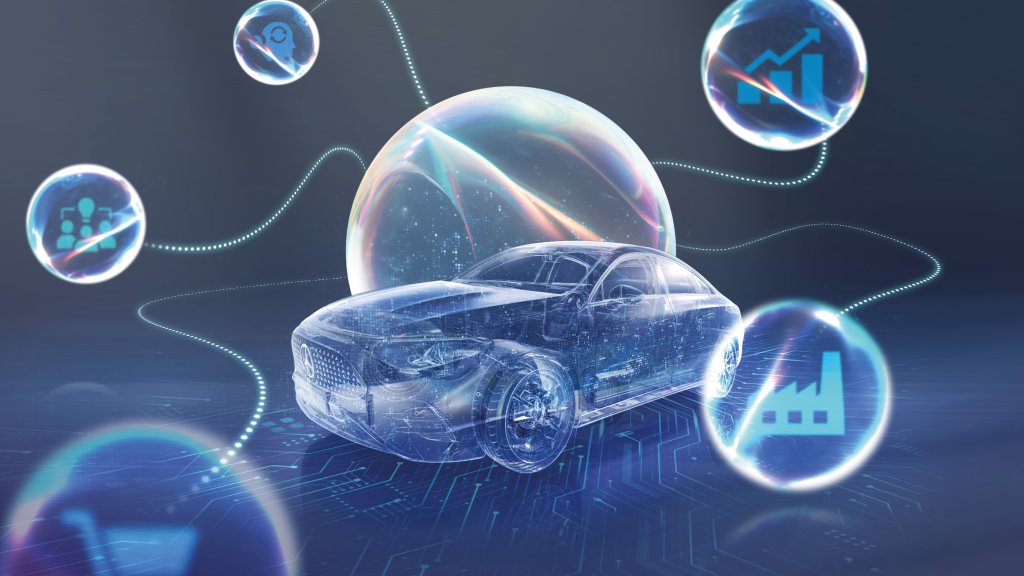
Stuttgart. Paradigm shift in product development: With PLM.AI (Product Lifecycle Management), Mercedes‑Benz is creating an AI-native digital backbone. It establishes an end-to-end, intelligent knowledge base that connects development, procurement, production, sales and aftersales. As a result, new products and technologies can be brought to series maturity faster, more efficiently and more sustainably in the future. This can reduce development time by up to 30 percent, with efficiency gains of up to 50 percent expected in individual engineering processes.
“With PLM.AI, we are creating the digital backbone for the future of product development at Mercedes-Benz and bringing new technologies to series maturity up to 30 percent faster. This will make us faster, more connected and more capable of learning. At the same time, we are creating a foundation that connects vehicle development, production and customer experience in a new dimension. Our high standards for quality and safety remain unchanged.”
100-percent AI-ready: PLM data is made usable for AI applications
Artificial intelligence is already firmly embedded in product development at Mercedes‑Benz. AI agents support a wide range of tasks, from optimizing material costs or certification and homologation processes to detecting and resolving faults or supporting software development. While these AI agents are currently used primarily within individual process steps, PLM.AI takes AI to the next level: Mercedes‑Benz is connecting different applications across development processes, enabled by standardized data models and the end-to-end integration of development data. This creates a seamless digital thread built on consistent data and clear standards. Information becomes available in real time, coordination is simplified and innovations can be implemented faster. With an investment of approximately half a billion euros, Mercedes‑Benz is paving the way for a new generation of product development that is more connected, data-driven and intelligent than ever before. This allows a more holistic assessment of complex interdependencies and faster translation of new technologies into customer benefits.
PLM.AI helps employees analyze complex relationships across functions, intelligently connect relevant information and identify trade-offs at an early stage. AI-powered simulations and development processes enable more targeted use of physical testing, which could be reduced by half over time. This allows more efficient use of resources and earlier validation of development decisions. Meanwhile, the focus remains on people, and the responsibility for product decisions remains with the teams.
One example is weight optimization. Changes to individual components affect aspects such as costs, crash behavior, hardware and software functions as well as production processes. Specialized AI agents will be able to analyze these interdependencies simultaneously. Development teams thus receive an overall picture faster, enabling them to evaluate solutions that account for safety, quality and commercial considerations. New potential is also emerging in aftersales through the linking of product, service and operating data.
Two strong technology partners for PLM.AI
Mercedes‑Benz is collaborating with two strategic technology partners for PLM.AI, namely CONTACT Software and Siemens. Together, they are contributing significantly to modernizing product development and implementing the PLM.AI architecture.
CONTACT Software provides the open PLM core layer with CONTACT Elements. This gives Mercedes‑Benz the modular and scalable foundation needed to integrate product data, processes and applications along the product development process and to flexibly incorporate future AI technologies.
Siemens supports Mercedes-Benz with comprehensive solutions and knowledge in the areas of AI-enabled automotive design, simulation and digital validation for the digital twin. This enables key engineering domains to be interconnected and accelerated through the shared data and process foundation of PLM.AI.
Mercedes‑Benz leads the end-to-end transformation and defines the target vision, target architecture, data models and governance of PLM.AI. The company also manages global implementation within an agile transformation program and continuously develops the new digital backbone. PLM.AI will form the cornerstone of Mercedes‑Benz’s engineering ecosystem – as the basis for fully integrated, data-driven and AI-supported development across all vehicle programs. At the same time, Mercedes‑Benz retains full ownership and control of its data as well as the AI models developed and used on its basis.